Why Long URLs Reduce Trust (And How Short Links Improve Click Confidence)
Learn why long URLs reduce trust, lower click-through rates, and how short links help create cleaner, safer, and more professional marketing links
March 30, 2026Pragnesh Boghani7 min read
Links are one of the most important parts of digital communication. Businesses use links in emails, WhatsApp messages, social media posts, advertisements, and SMS campaigns every day. However, not all links create the same level of trust.
Long URLs filled with random characters, tracking parameters, and complicated structures often look confusing and suspicious. When users see a long and messy URL, they hesitate before clicking. In many cases, they avoid clicking altogether.
This is why marketers and businesses are increasingly switching to short links and branded links. In this article, we will explain why long URLs reduce trust, how they affect click behavior, and what businesses can do to improve user confidence.
What Is a Long URL?
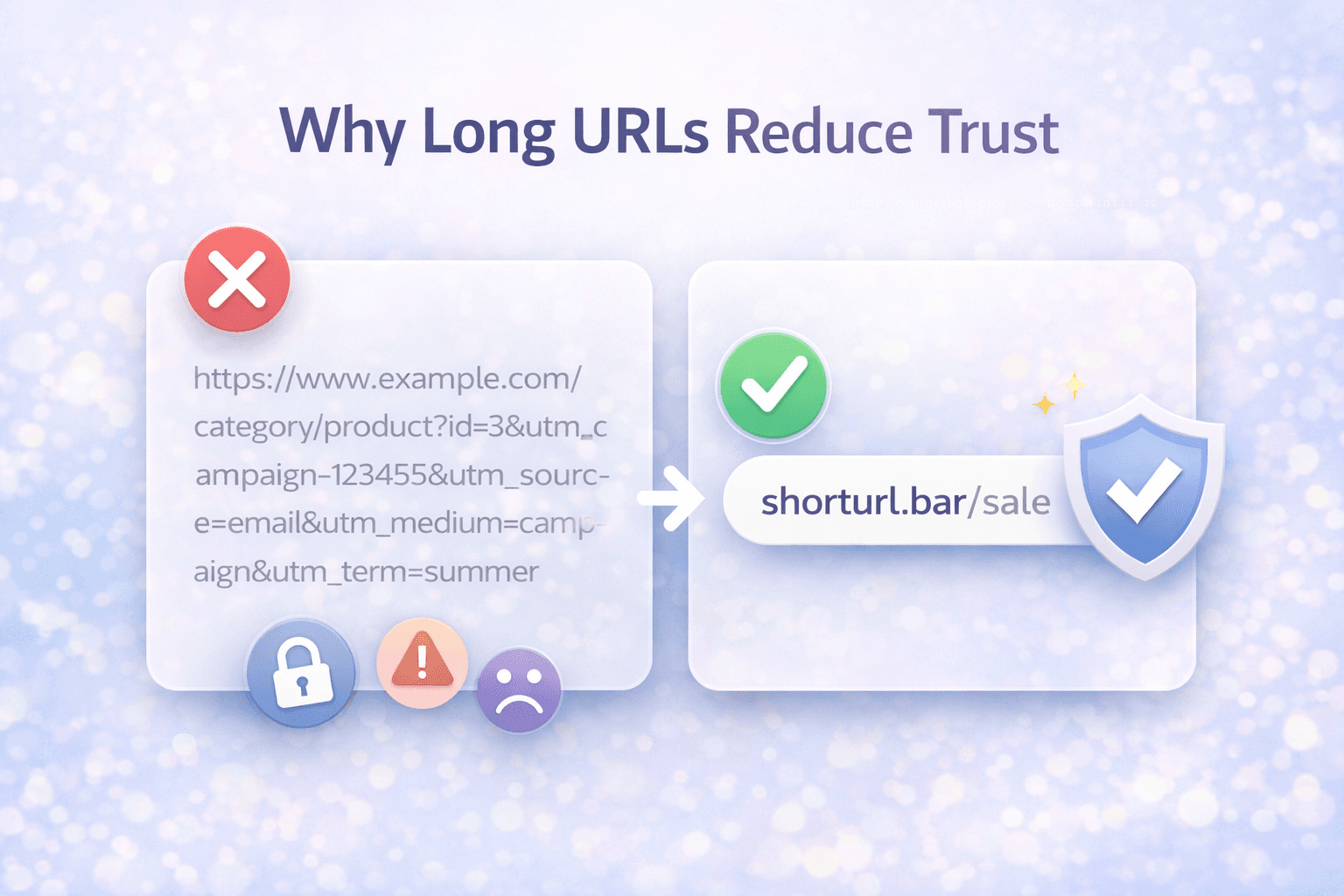
A long URL is a web address that contains multiple parameters, tracking codes, or deep navigation paths. These URLs are usually generated automatically by websites, marketing tools, or analytics platforms.
While this URL works correctly, it looks complicated and difficult to understand. Users often cannot tell where the link will take them.
Why Long URLs Reduce Trust
1. Long URLs Look Suspicious
One of the main reasons long URLs reduce trust is that they look suspicious. Many users associate long and complex links with spam, phishing attempts, or unsafe websites.
When people cannot recognize the destination of a link, they become cautious. This hesitation reduces click rates and lowers engagement.
2. Hard-to-Read Links Create Confusion
Long URLs are difficult to read and understand. When users see unfamiliar parameters such as "utm_source" or long strings of numbers and letters, they cannot easily interpret the link.
This confusion leads to uncertainty, which directly affects trust and user behavior.
3. Long URLs Look Unprofessional
Businesses that send long, messy links may appear less organized or less professional. A clean link shows attention to detail and improves the perception of your brand.
Professional communication requires clear and simple presentation, including the links you share.
4. Users Fear Hidden Destinations
Many long URLs hide their true destination behind complicated structures. Users cannot easily identify where the link leads.
This creates hesitation, especially in email, WhatsApp, and SMS messages where security concerns are common.
5. Mobile Users Avoid Long Links
Mobile users are particularly cautious about long URLs. Small screens make long links difficult to read, increasing the chance that users ignore them.
Since most internet traffic comes from mobile devices, link readability is more important than ever.
How Long URLs Affect Click-Through Rates
Click-through rate (CTR) is one of the most important metrics in marketing campaigns. If users do not trust a link, they will not click it.
Long URLs often reduce CTR because:
They look unsafe
They are difficult to read
They hide the destination
They appear unprofessional
Even small improvements in click confidence can significantly increase engagement across campaigns.
How Short Links Improve Trust
Short links solve many of the problems caused by long URLs. They create cleaner, easier-to-understand links that users feel more comfortable clicking.
1. Short Links Look Cleaner
A short link removes unnecessary characters and simplifies the URL structure. This makes the link look more organized and readable.
2. Branded Short Links Increase Confidence
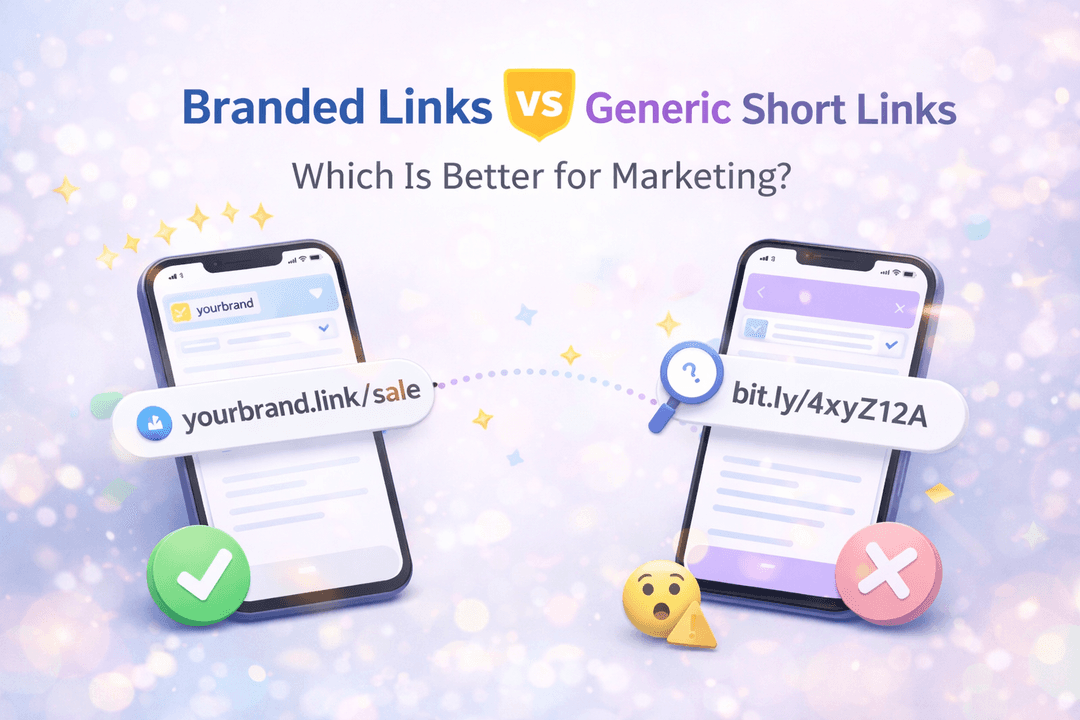
Branded short links include your business name in the URL. This helps users recognize the sender and builds confidence before clicking.
For example:
https://yourbrand.link/summer-sale
This looks safer than a long, complicated URL.
3. Short Links Are Easier to Share
Short links are easier to copy, paste, and share across platforms. They fit better in SMS messages, social media captions, and marketing materials.
4. Short Links Improve Brand Image
Clean links reflect a professional brand identity. When users see consistent branded links, they associate them with reliability and trust.
Common Places Where Long URLs Cause Problems
Long URLs are especially problematic in certain marketing environments.
Email marketing campaigns
WhatsApp marketing messages
SMS campaigns
Social media posts
QR code campaigns
Offline marketing materials
In these channels, shorter and cleaner links perform much better.
Best Practices to Avoid Trust Issues with Links
Use short links instead of long URLs
Create branded links whenever possible
Use meaningful link names
Avoid random characters in public-facing links
Keep link structure simple
Test links before sharing them
These small improvements can significantly improve user trust and campaign performance.
SEO Perspective: Why Trust Matters for Links
From an SEO perspective, trust is closely connected to user behavior. If users click links more often and engage with content, websites gain stronger performance signals.
Short and trustworthy links support better engagement, which indirectly supports long-term marketing success and organic growth.
Final Thoughts
Long URLs may work technically, but they often reduce trust and lower engagement. Users prefer links that look clean, simple, and reliable.
Short links and branded links provide a better experience by improving readability, strengthening trust, and increasing click confidence.
If your goal is to create professional campaigns and improve user engagement, replacing long URLs with short links is a simple but powerful step.